
Emergency Leak Detection for Wet Walls, Floors and Water Bills
Leak detection finds where water is escaping a plumbing system, and it is for anyone with a damp wall, a ceiling stain, a meter that keeps moving or a water bill that no longer matches the household. A plumber serving your area can locate the source and repair it.
- Licensed and insured plumbers
- Same-day service when available
- 24/7 emergency dispatch
What does leak detection involve, and who needs it?
A leak detection visit answers one question: where is the water going? The plumber starts by listening to what you have seen, then tests the system in stages so the source is pinned down before anything is opened. That order matters, because cutting into a wall on a guess leaves two repairs instead of one.
Three groups call most often. Some homeowners see water: a stain spreading on a ceiling, a baseboard that has swollen, a floor that feels cold and damp. Others see numbers: a bill that jumped or a meter that moves when the house is quiet. The third group sees nothing, but hears hissing in a wall or smells damp material, and wants the source confirmed before it turns into damage.
Plumbing leak repair once the source is found
Repair follows location. A weeping fitting under a sink is a short job. A pinhole in a supply line behind a wall needs an access opening, a section cut out and new pipe joined in. A failed line under a floor can mean a decision between patching and rerouting. The plumber should explain which one applies and why before work begins.
Plain questions to put to the plumber help here. Ask what failed, whether the same pipe is likely to fail again nearby, and what has to be opened up to reach it. A repair on pipe that is worn along its whole length buys time, not a fix, and that is when the page on replacing worn supply pipe becomes the better read.
Leak showing up right now?
Close the main valve if water is spreading, then call. Dispatch can describe what to do while a plumber is on the way.
Fixture leak or hidden leak? Matching the symptom
Many leaks start at a fixture and are easy to confirm. A toilet that runs after flushing, a faucet that drips at the base and a showerhead that weeps all announce themselves. Common signs of a leak differ between the two kinds, so a quick comparison saves a wasted call.
| What you notice | Likely source | What the plumber checks |
|---|---|---|
| Toilet refills with nobody using it | Worn flapper or fill valve | Dye test, valve seat, float height |
| Cabinet floor under the sink is damp | Supply connection or drain joint | Each connection with a dry paper towel |
| Stain that grows on a ceiling | Supply line or drain above | Pressure test of lines over that room |
| Meter moves with every fixture off | Concealed or buried line | Section isolation and listening along the run |
| Hissing near the water heater | Fitting, relief valve or tank | Connections, relief valve, tank base |
Faucet, toilet and fixture work has its own page, which covers the parts and the repair itself. See faucet and toilet repair if the table pointed you to a fixture.
Reading the water meter and the water bill
The meter is the simplest tool in the house. With every fixture off, a still dial means the pipes are holding. A moving dial means water is leaving, and the speed hints at the size of the loss. A slow creep points to a toilet or a fine pinhole. A steady spin points to a split line.
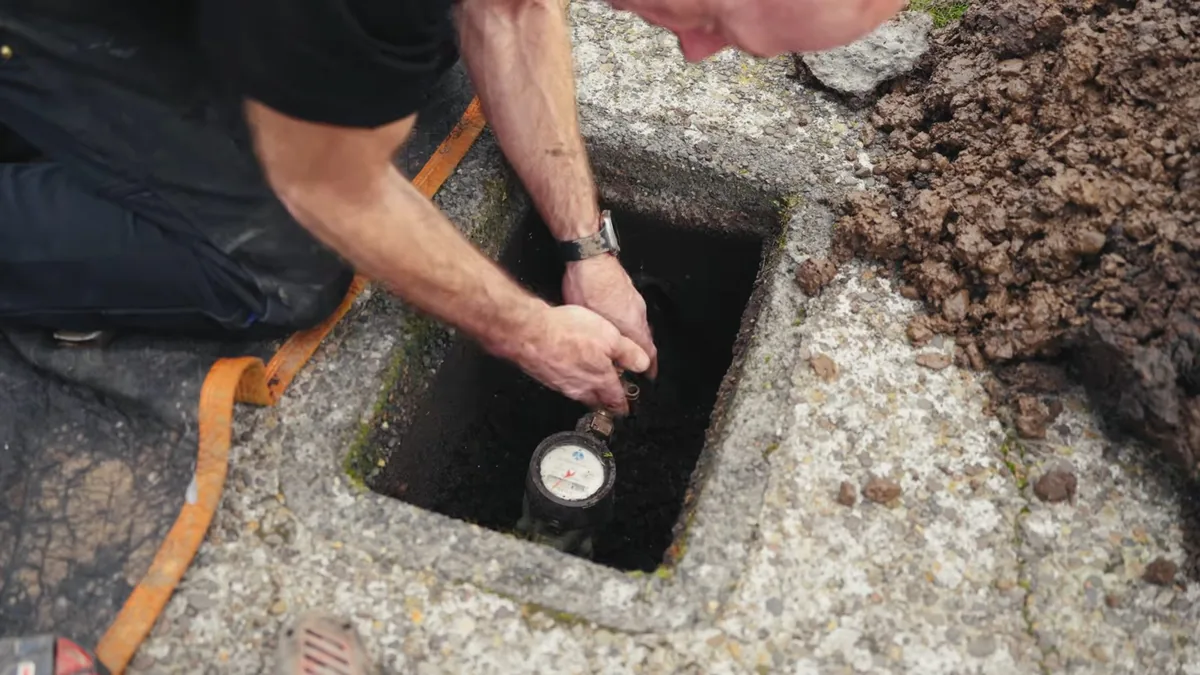
Bills tell a slower version of the same story. Compare this month with the same month last year rather than with last month, since summer use differs from winter use in a desert home. A gap with no new guests, no new pool fill and no new irrigation schedule is worth a meter test.
- Shut off every tap, appliance and the ice maker.
- Write down the meter reading and the time.
- Wait at least fifteen minutes, then read it again.
- Tell the plumber both readings when you call.
Leaks behind walls and ceilings
Wall and ceiling leaks are the ones that cause the most surprise, because the water travels. A stain on a ceiling is often several feet from the pipe that caused it, since water follows framing and drywall seams until it finds a low spot. Warm, humid air makes the stain look worse than the leak itself, and a leak can hide behind a wall for weeks before paint bubbles. Water leaks that keep wetting framing and drywall end up damaging the structure of a property, which is why testing early pays.
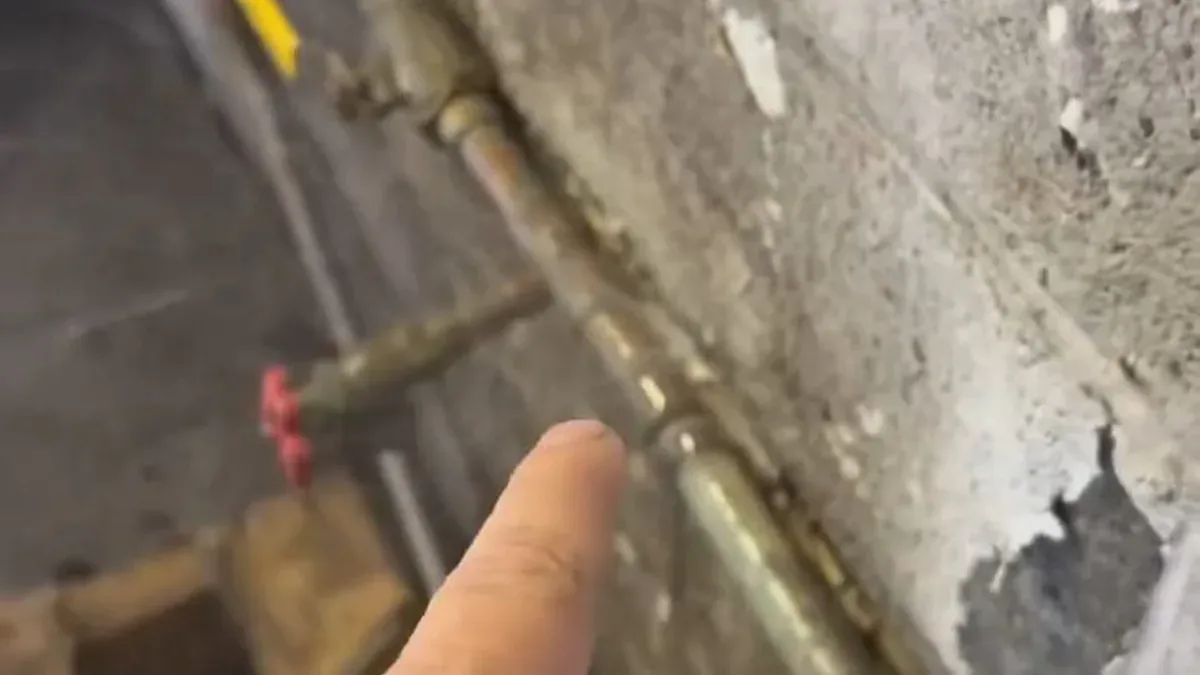
For that reason the plumber tests before cutting. Moisture readings show where the damp material ends, and pressure tests show which line is losing water. If water has already soaked insulation or drywall, the cleanup falls under water damage removal and drying, which is handled as its own job.
Detection methods: listening, thermal imaging and pressure tests
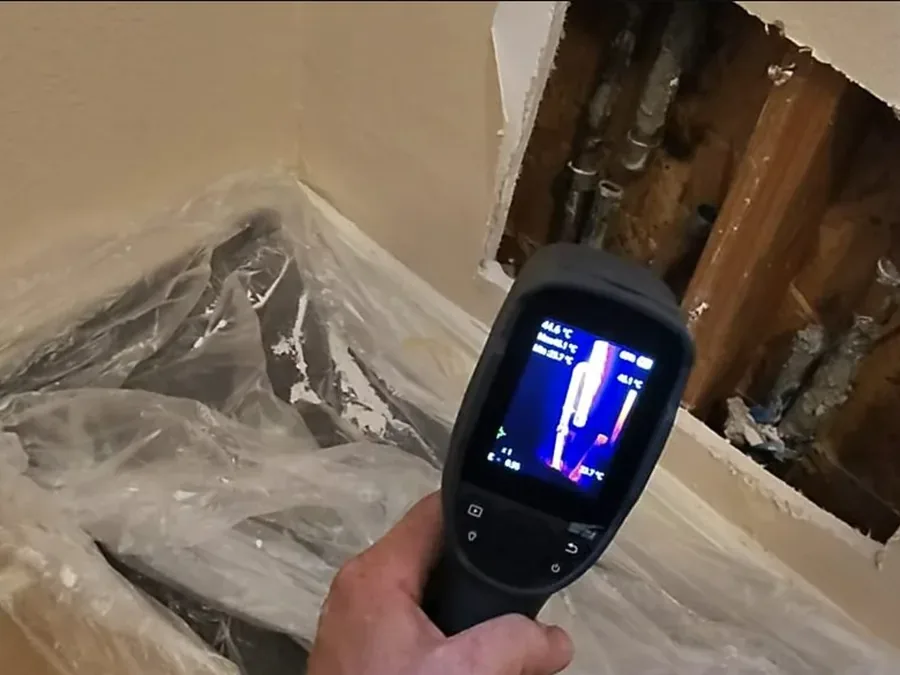
Three methods cover most homes. Acoustic listening picks up the sound of water escaping a pressurized pipe, which works well along accessible runs. Thermal imaging reads temperature differences on a wall or floor and can show a warm line from a hot water leak. Pressure testing isolates a section of pipe, holds it under pressure and watches whether the gauge drops.
A plumbing inspection is the quieter cousin of leak detection. It checks the condition of visible pipe, shutoff valves, supply connectors and water pressure, and it records anything worn so that plumbing maintenance and inspections can catch small problems early. Ask for notes on what looked worn.
No single method suits every leak. Electronic and gas tracer methods exist for the hardest cases, and the plumber chooses by pipe type and access. Ask which method is being used and what it is expected to show.
Meter still moving with everything off?
That pattern points to a concealed leak. Call and give dispatch both meter readings.
Pool leaks: telling evaporation from loss
Pools matter here. Redfin lists 111 Carefree homes with pools, so a leaking pool line is a realistic call. Desert heat evaporates water daily, which hides real leaks, so the first job is separating normal loss from a leak.

Leaks in the supply or return lines between the equipment and the pool are plumbing work. Leaks in the shell are a pool contractor matter, and a plumber will say so plainly.
Homes that sit empty, and yard lines
A large share of Carefree homes are used part of the year. Census-based counts put about 23 percent of housing units in the seasonal or vacation group, according to zip-codes.com. A leak in an empty house runs unseen for weeks, so closing the main valve before a long trip is the simplest protection. A neighbor with a key and a phone number is the second.
Sprinkler and irrigation leaks are a different trade with different equipment, so this page leaves them to an irrigation contractor. A plumber will still trace water that reaches the house.
Leak questions from Carefree homeowners
Is there a water leak in my house, and how can I tell?
Start with the meter. Turn off every fixture and appliance, then watch the leak indicator on the water meter for fifteen minutes. If it still moves, water is escaping somewhere. If it holds still, the problem may be a fixture that only leaks under use, such as a toilet flapper or a shower valve. Both outcomes point to a different next step, and a plumber can take either one from there.
Why is my water bill high when nothing looks wet?
A bill that climbs without a change in habits usually means water is moving through a line you cannot see: a toilet that refills on its own, a buried line, or a pipe inside a wall. Check the meter first, then listen for hissing near the water heater and the main shutoff. If the meter spins with everything off, call and describe the pattern.
How do I find a hidden or underground leak?
1. Close every tap and appliance. 2. Read the meter and note the number. 3. Wait twenty minutes without using water and read it again. 4. Look for soft ground, a damp stretch of floor or warm spots on a slab. A moving meter with no visible water means the leak is concealed, and a plumber can narrow it down by listening along the pipe or testing sections. Do not dig on your own, since buried utilities may be close by.
What does a leak detection visit cost, and is it worth it?
The price depends on how many lines must be tested and how hard they are to reach, so a plumber quotes after hearing the symptoms. The comparison that matters is against the damage: a small leak left alone can soak drywall, cabinets and flooring, and those repairs often cost more than the detection and the fix combined. Ask for the scope in writing before work starts.
Water loss does not stop on its own
Describe the wet spot or the meter pattern and dispatch will take it from there.
- Licensed and insured plumbers
- Same-day service when available
- 24/7 emergency dispatch